
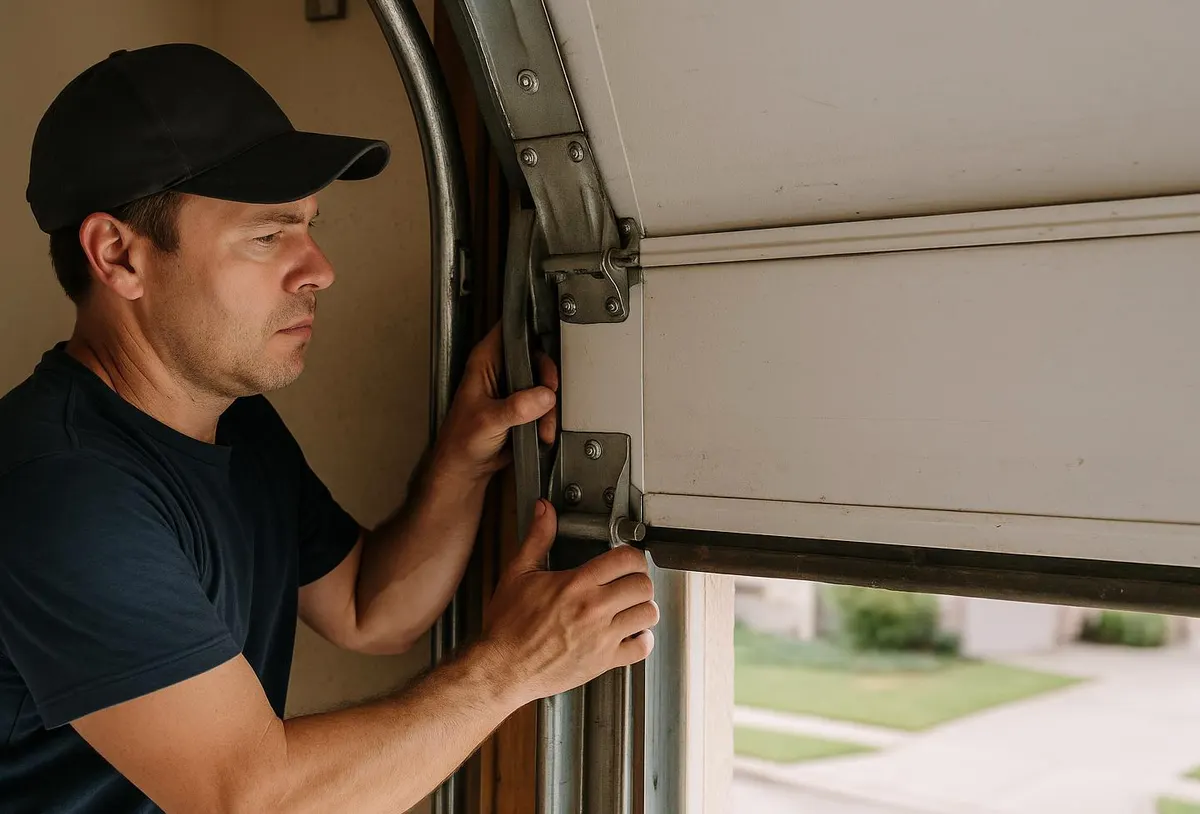
What a Technician Sees After a Windstorm
The calls start the morning after a big wind event. A homeowner opens the garage to find the door bowed outward between the panels, a track pulled loose from the wall, or worse, the whole door sitting crooked on its tracks because one hinge gave way. In milder cases, it's just a door that now rattles and shudders every time the wind picks up, with daylight visible around the edges where there wasn't any before. Almost every one of these calls traces back to the same root cause: nobody thought about the garage door as a structural piece of the house until the wind made it one.
Why the Garage Door Is the Weakest Wall
A garage door is the largest moving opening in most homes, and unlike a solid wall, it depends on tracks, rollers, hinges, and a spring system to stay in place under pressure. When high wind hits the front of a house, that pressure pushes inward on every surface, including the garage door panel. A well-built door with reinforced panels and properly tensioned springs can flex and recover. A door with worn rollers, a sagging track, or panels already weakened by years of damp Pacific Northwest weather has much less margin before something gives. Once a garage door fails in a storm, wind can push into the garage cavity itself, which puts uplift pressure on the roof from the inside. That's the scenario insurers and builders mean when they call the garage door a home's weakest wall.
Pre-Storm Checklist for the Wind and Rain Season
Tracks and Rollers
Stand inside the garage with the door closed and look at both tracks from bottom to top. They should run straight and parallel, with no bends, gaps at the wall brackets, or rust buildup. Rollers that are cracked, flat on one side, or caked with grime won't absorb the shake of a gusty door the way smooth, properly lubricated rollers will. This is also the point in the year to apply a silicone-based lubricant to rollers, hinges, and the torsion spring, since months of damp air accelerate corrosion on anything left dry.
Panels and Weatherstripping
Run a hand along the bottom seal and side weatherstripping. If it's cracked, flattened, or pulling away from the track, wind-driven rain will find its way in regardless of how well the door itself holds up. Wood-trimmed doors and door frames are worth a close look for soft spots or dark staining, since trapped moisture against wood in this climate turns into rot faster than most people expect, and rotted trim gives wind and water an easy entry point even when the door panel is fine.
Opener and Backup Power
Wind storms here often take the power out along with them. If the opener has no battery backup, a prolonged outage means the door is stuck in whatever position it was in when the power dropped, which is a problem if that's partway open. A battery backup unit keeps the opener functional for a set number of cycles during an outage, letting the door close fully and stay secure until power returns.
Hardware Fasteners
Loose lag screws and worn-out wall brackets are common after years of seasonal temperature swings and humidity. A quarter-turn on every visible fastener, checked with a wrench rather than by eye, catches most of the loosening before a storm turns it into a failure point.
After the Storm: What to Watch For
Once the wind and ice pass, check for moss or standing moisture collecting at the base of the door track and along any wood trim, since this region's damp stretches make that buildup a near-constant issue rather than a one-time event. Moss holds moisture against metal and wood alike, which speeds up both rust and rot in exactly the areas that take the brunt of wind pressure.
When to Call Lynnwood Garage Door
If a door is sagging on one side, won't seat flush against the weatherstripping, or you hear a popping or grinding sound when it's windy outside, that's worth a call before the next storm rather than after. Our technicians inspect track alignment, spring tension, and hardware as part of a standard garage door maintenance visit, and we handle spring replacement on-site when a spring shows wear that puts it at risk of snapping under load. For homes where the opener has no backup power, we also install battery backup systems so the door can still close during an outage.
If your garage door has been acting up with wind gusts, or it's just been a while since anyone looked at the tracks and springs, call Lynnwood Garage Door. We serve Lynnwood, WA and the surrounding area, and we'd rather catch a problem in October than respond to storm damage in January.