
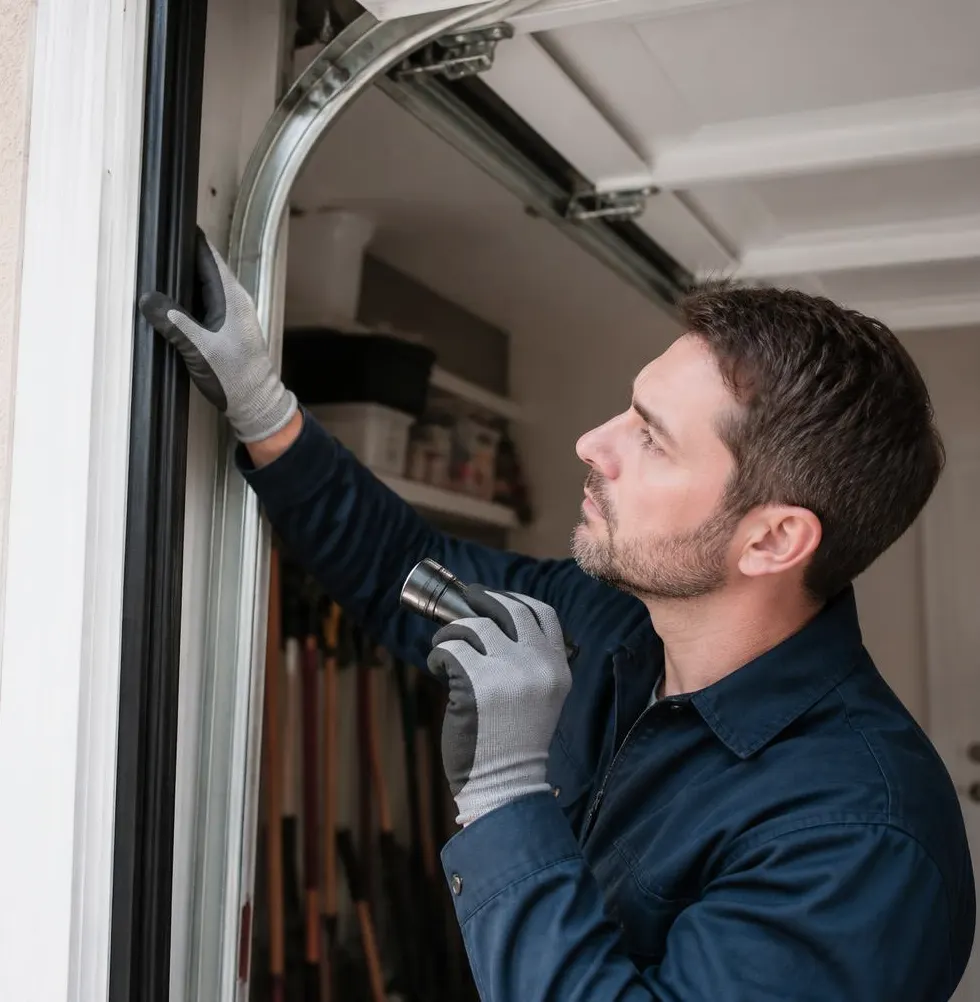
What a Technician Sees This Time of Year
By late October, service calls in this area start following a pattern. A homeowner notices the garage door is suddenly louder, or it's sticking halfway up, or water is pooling just inside the threshold. Nine times out of ten, it's not one big problem — it's a handful of small ones that summer's dry weather let slide. Rubber seals that cracked in the sun now let in drafts and puddles. Hardware that was fine in July has a skin of surface rust. A wood door panel that looked okay has gone soft at the bottom corner. None of this is dramatic, but it adds up fast once the rain settles in for the season.
Check the Weatherstripping First
The rubber seal along the bottom of the door and the strips along the sides are your first line of defense against wind-driven rain. Over a few seasons, this weatherstripping flattens, cracks, or pulls loose from its track, especially if it's been baked by sun one month and soaked the next. Run your hand along it — if it feels stiff, brittle, or has visible gaps, it's not doing its job anymore. Replacement kits are inexpensive and most homeowners can install them in under an hour. Don't skip the side seals; a lot of people only replace the bottom strip and still end up with water creeping in along the edges during a hard rain.
Check the Threshold Too
If your garage floor slopes even slightly toward the door, or if you've noticed standing water inside after a storm, a flexible threshold seal on the floor itself can help redirect that water back outside before it reaches your stored belongings or the bottom of the door panel.
Hardware: Look for Rust Before It Spreads
Months of damp air are hard on unprotected metal. Hinges, rollers, tracks, and especially the springs are all candidates for surface rust, which starts as a light orange film and can progress to pitting if ignored. A wire brush and a light coat of machine oil on hinges and rollers will slow this down significantly. Springs are different — they're under extreme tension, and rust weakens the metal in ways you can't fully judge by looking at it. If a spring looks rough, flaky, or has visible pitting, that's a sign it's nearing the end of its life, not something to just clean up and leave alone.
Wood Doors and Trim Need Extra Attention
If your garage has a wood door or wood trim around the opening, this is the season that does the damage. Moss and algae take hold in shaded, damp corners, and once established they hold moisture against the wood constantly. Scrub visible growth off with a stiff brush and a mild cleaner, then let the area dry fully before sealing or painting any exposed wood. Press a screwdriver gently into the bottom edge of wood panels and trim boards — if it sinks in easily, you're dealing with rot, not just surface wear, and that section will need to be addressed before winter moisture makes it worse.
Test the Opener and Safety Sensors
Cold, damp air affects electronics and lubricants more than people expect. If your opener has been running rough, hesitating, or reversing unexpectedly, check the photo-eye sensors near the floor on each side of the track — condensation or a knocked-out-of-alignment sensor is a common culprit this time of year. It's also worth testing the auto-reverse safety feature now, before ice and wind storms mean you're relying on the opener working correctly every single time.
Do a Quick Balance and Lubrication Pass
Disconnect the opener and lift the door halfway by hand. It should stay in place on its own. If it drifts up or falls, the spring tension is off, and that's a job for a professional rather than a DIY adjustment. While you're at it, lubricate the rollers, hinges, and springs with a garage-door-specific lubricant, not household oil, which attracts grit and grime in wet weather.
When to Call Lynnwood Garage Door
If you've found a spring that looks worn or rusted, a door that won't stay balanced, or an opener that's acting unpredictably, those aren't weekend projects — they're safety issues. Lynnwood Garage Door handles spring replacement and garage door opener repair for homes throughout the area, and a fall maintenance visit can catch the smaller problems, like worn rollers or misaligned tracks, before they turn into a dead-of-winter breakdown. We also handle general garage door maintenance for homeowners who'd rather have a technician run the full check than do it panel by panel themselves.
Get your garage door ready before the rain and wind really set in. Call Lynnwood Garage Door today to schedule a winter-readiness check for your home in Lynnwood, WA.